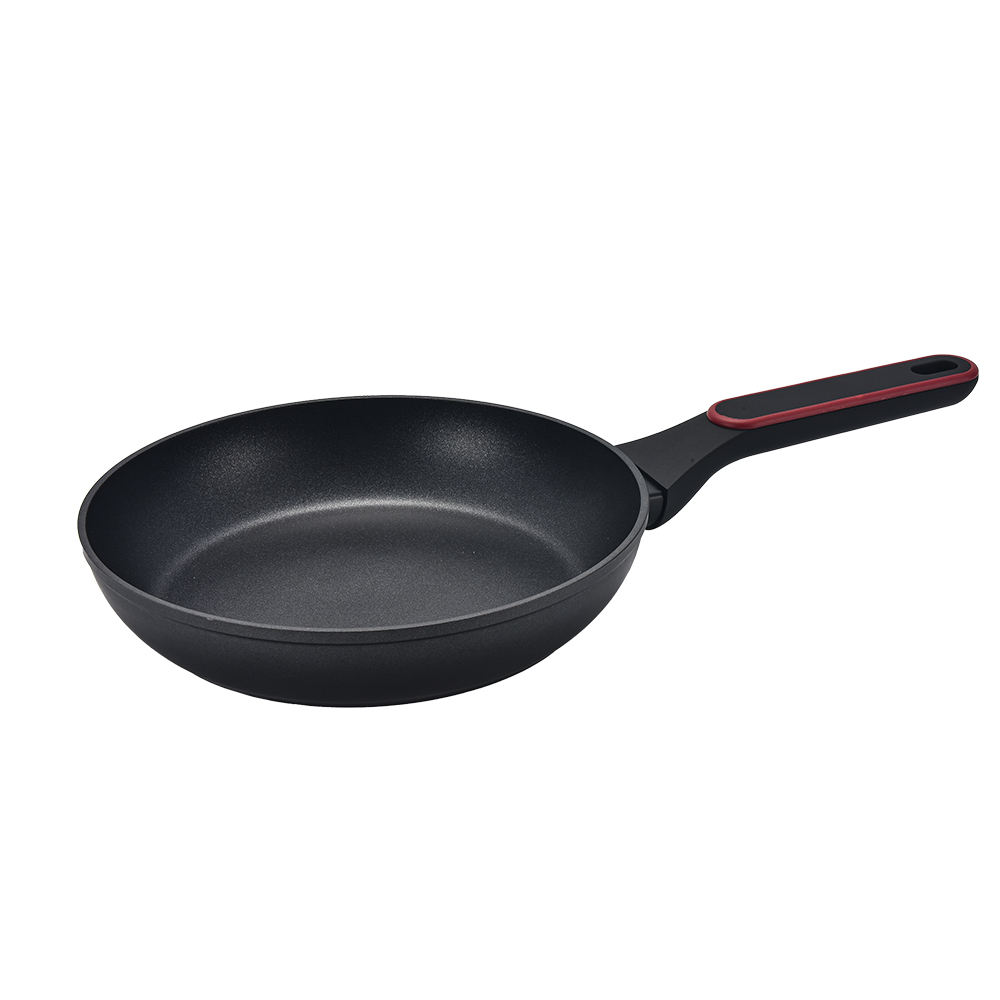
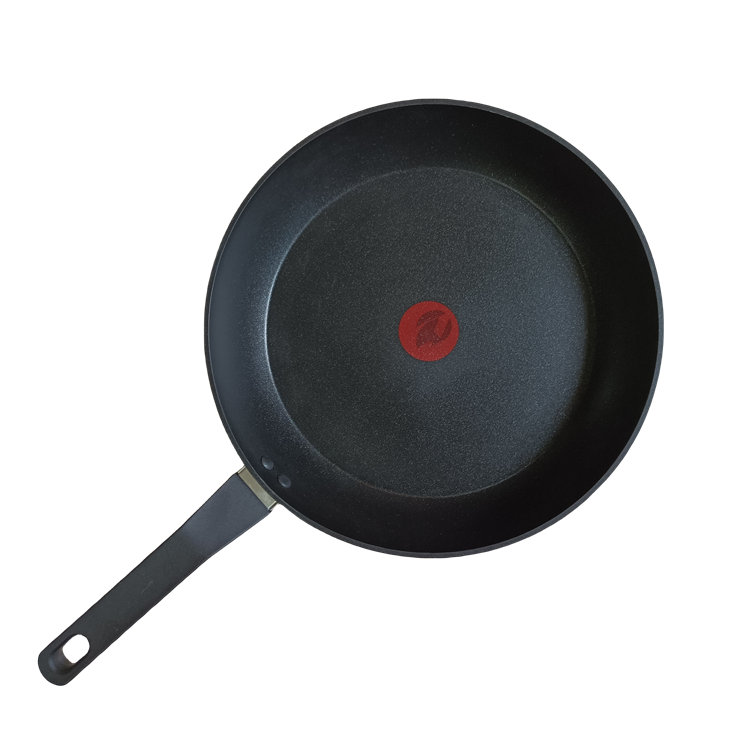
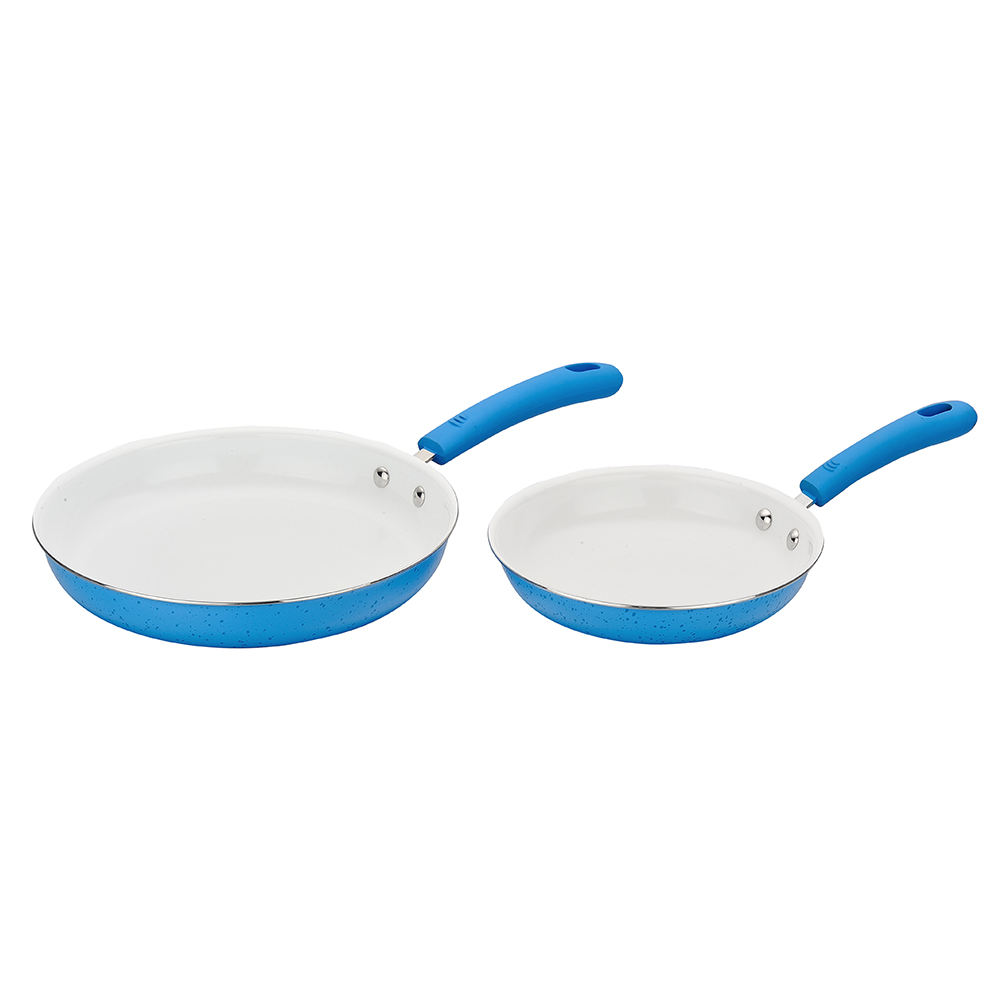
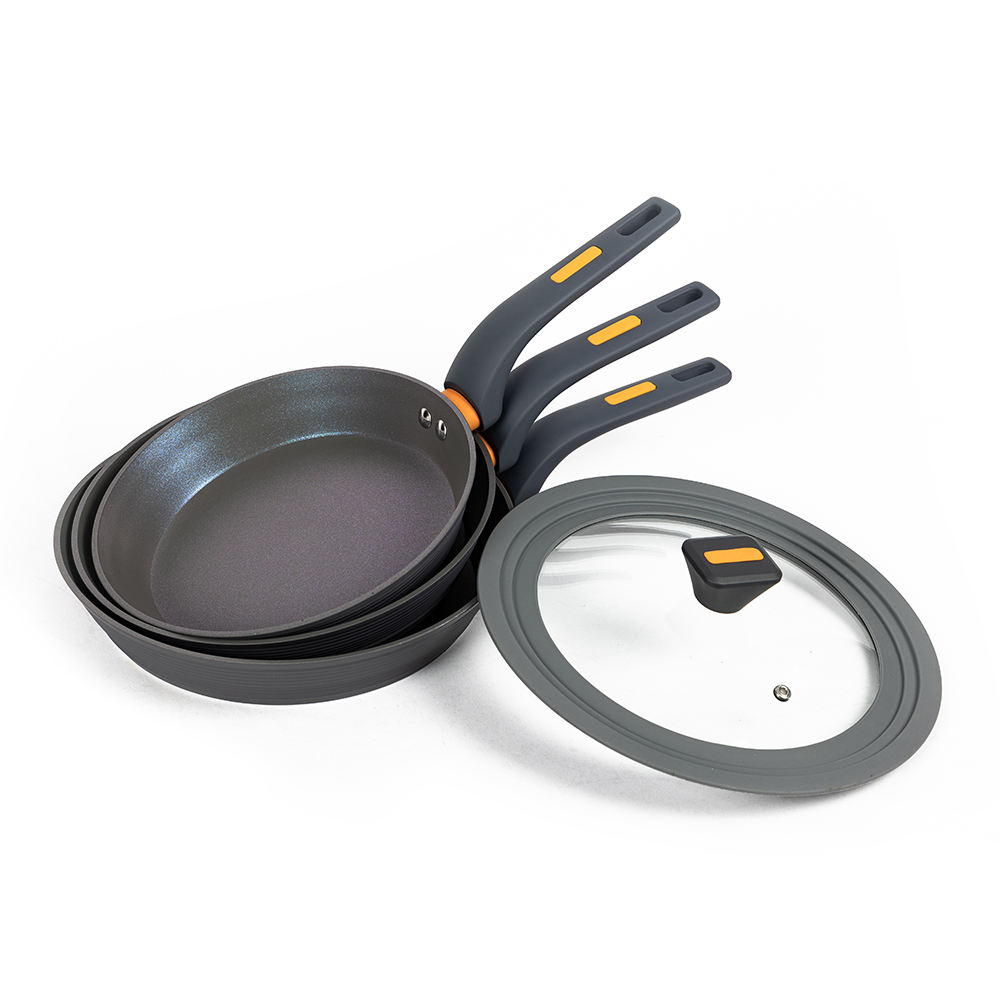
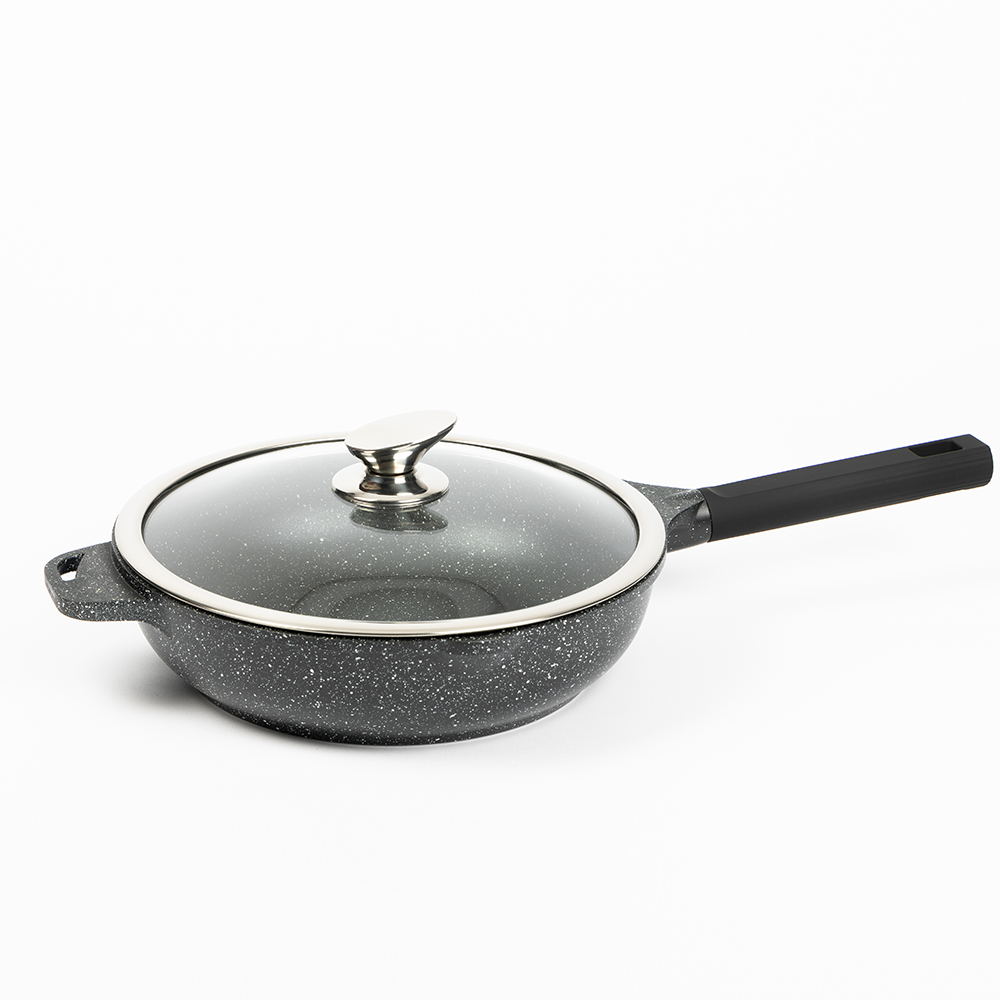
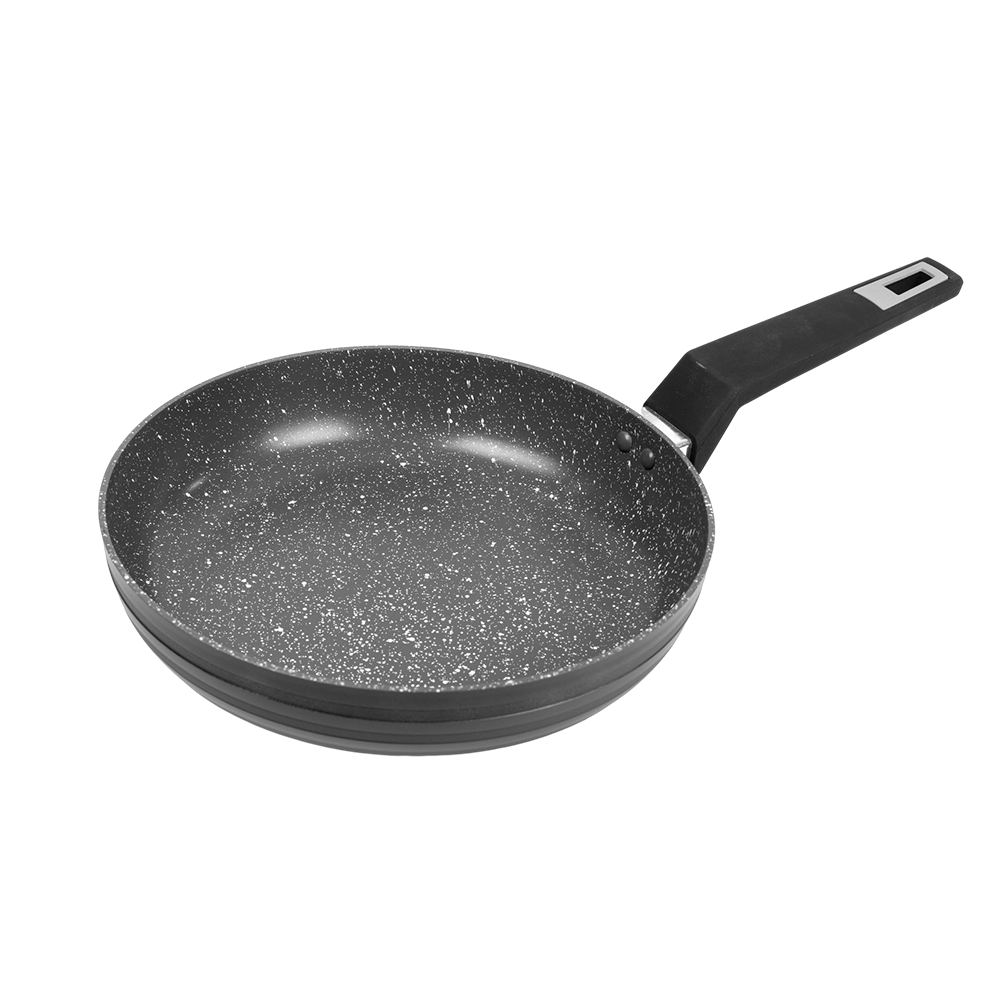
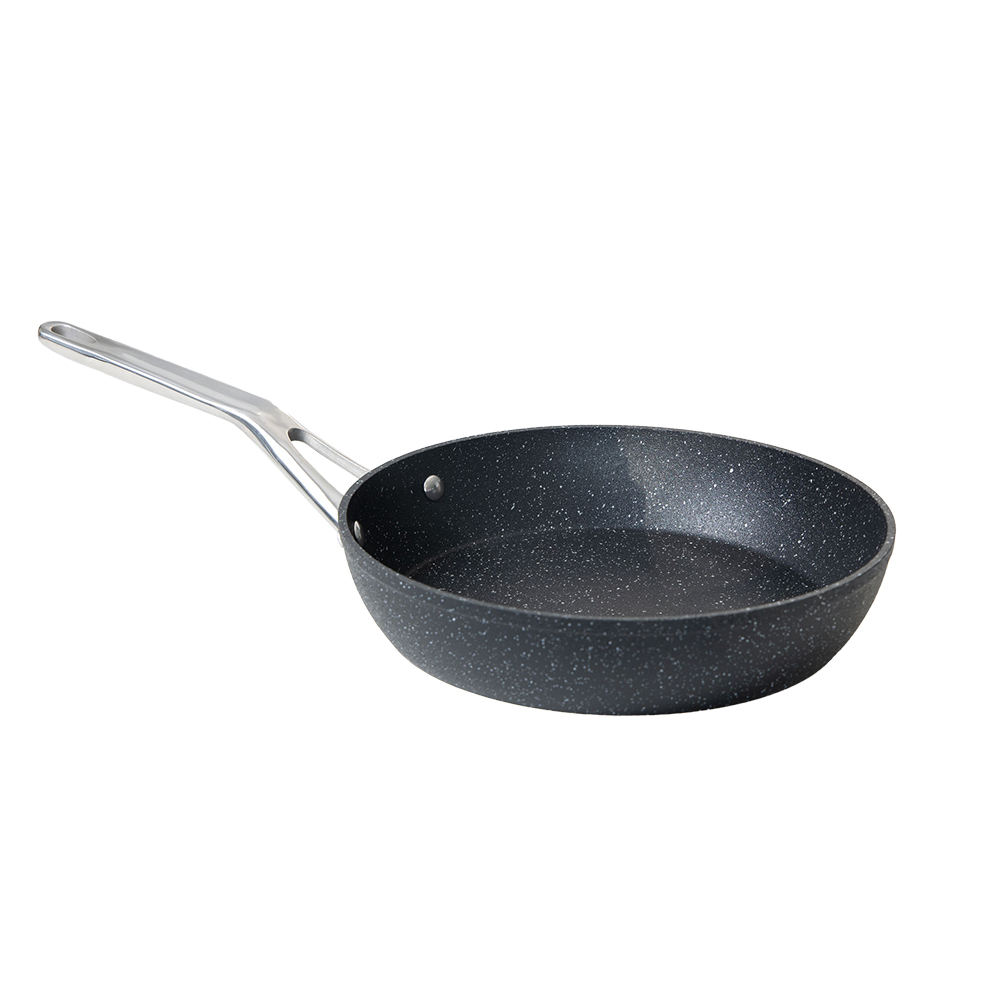
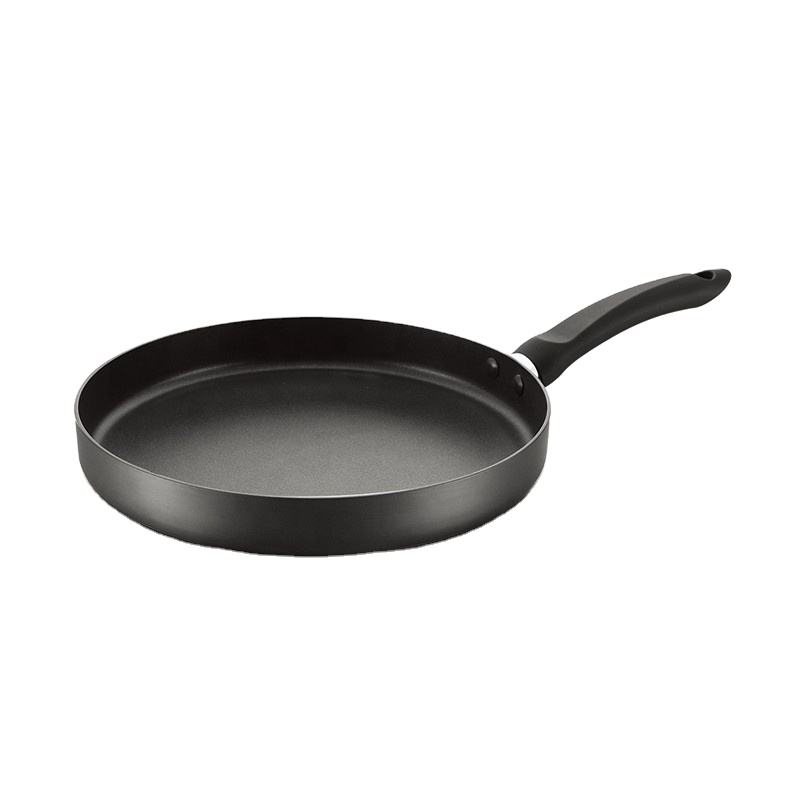
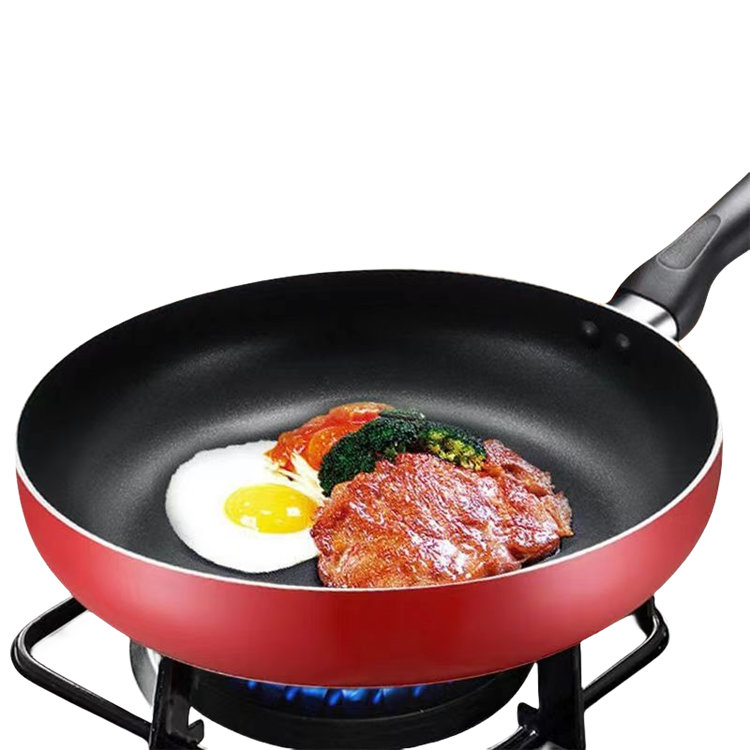
1. Why are ordinary non-stick pans afraid of high flames on gas stoves?
Fatal flaws of ordinary non-stick pans
Low temperature resistance limit: Teflon coating will decompose and release harmful substances when it exceeds 260℃.
O material base é muito fino: o corpo da panela de liga de alumínio tem condução irregular de calor, e o superaquecimento local sob chamas altas faz com que o fundo queime.
Not scratch-resistant: the spatula can easily damage the coating, forming a "dead corner" for sticking to the pan.
The solution to the cast iron non-stick pan
Thickened cast iron base material (5mm ) → Strong heat storage, more uniform temperature
Physical chemical double non-stick layer → No fear of metal spatulas and high temperatures
Honeycomb relief structure → Food suspension, reducing contact surface
2. Analysis of the 6 core advantages of cast iron non-stick pans
Super Durability
Substrato de ferro fundido espessado (5 mm): a vida anti-queda, anti-deformação e a vida de serviço excede em muito a das panelas não-de-alumínio de liga de alumínio (as panelas antiaderentes comuns geralmente são descartadas após 1-2 anos, enquanto as panelas não-falhadas podem ser usadas por 5-10 anos).
Camada de liga cerâmica sem grau de grau militar: camada de liga de cerâmica pulverizada, resistência à alta temperatura de 450 ℃ (Teflon é de apenas 260 ℃), dureza de 9h (perto de safira) e resistência a arranhões aumentou 300%.
Comparação:
| Cookware type | Average lifespan | Drop resistance | Scratch resistance |
| Ordinary non-stick pan | 1-2 years | Poor (easy to deform) | Weak (easy to scratch) |
| Traditional cast iron pan | 10 years | Extremely strong | Strong (but needs to be maintained) |
| Cast iron non-stick pan | 5-10 years | Extremely strong | Extremely strong |
rue high-temperature non-stick
Physical chemical double non-stick technology:
Honeycomb relief structure: Reduce food contact area and achieve physical anti-stick.
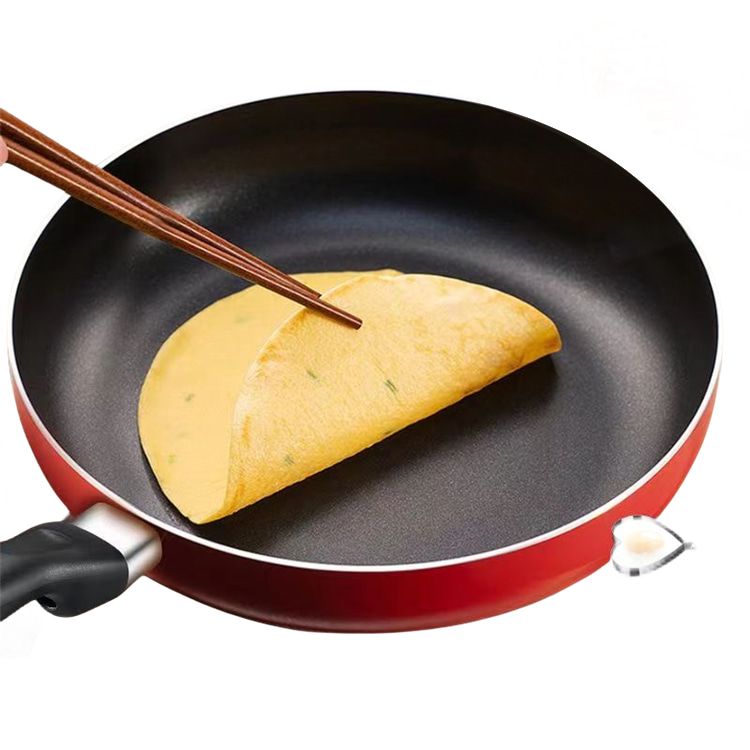
Micron-level ceramic coating: Still maintain non-stick properties at high temperatures, stir-frying, frying fish, and pancakes are non-stick.
Actual test results:
Fried eggs can be oil-free and non-stick (ordinary non-stick pans require a small amount of oil).
Fried starchy foods (such as shredded potatoes) will not stick to the pan.
Stable heat storage and uniform heating
The natural advantages of cast iron:
Condução de calor lento, mas um forte armazenamento de calor, ele ainda pode se aquecer depois de desligar o fogo, adequado para cozinhar que requer temperatura constante, como bifes e panquecas.
With aluminum interlayer (some high-end models), further optimize the uniformity of heat conduction and avoid local overheating.
Cenários aplicáveis:
Stir-frying (concentrated firepower)
Frying (stable temperature)
Stew (good heat preservation)
Healthy and safe, no chemical release
Food grade safety:
No PTFE (Teflon) coating, no harmful substances released at high temperature.
Cast iron itself contains trace iron elements, which can increase the iron content in food (suitable for people with iron deficiency).
3. Frequently Asked Questions (FAQ) about Cast Iron Non-Stick Pans
- What is the difference between a cast iron non-stick pan and an ordinary non-stick pan?
Material: Cast iron non-stick pans are based on thickened cast iron (5mm ), while ordinary non-stick pans are mostly aluminum alloys.
Coating: As panelas não-bastões de ferro fundido usam o revestimento de liga de cerâmica (resistente a 450 ℃ Alta temperatura), enquanto as panelas antiaderentes comuns são principalmente o revestimento de Teflon (resistente a 260 ℃).
Durability: The life of a cast iron non-stick pan is 5-10 years, while that of an ordinary non-stick pan is only 1-2 years.
- Is a cast iron non-stick pan really non-stick?
Yes, but the following conditions must be met:
Open the pan correctly: For the first use, use fat pork or vegetable oil to maintain it and form an oil film layer.
Panflet e óleo frio: pré -aqueça em fogo médio ou baixo primeiro, depois despeje o óleo e, finalmente, adicione os ingredientes.
Avoid acidic foods: such as tomatoes and lemons, which may damage the oil film.
- Why are cast iron non-stick pans heavier than ordinary pans?
O ferro fundido possui alta densidade e design espessado (geralmente mais de 5 mm) para fazer com que ele tenha um forte armazenamento de calor, adequado para fritar e fritar, mas é pesado (cerca de 3-5 kg).
- How to clean and maintain?
Cleaning: warm water soft cloth, no steel wool and detergent (destroy the oil film).
Drying: dry on low heat after washing, and apply thin oil to prevent rust.
Long-term storage: wrap kitchen paper after oiling to avoid moisture.
- Which stoves are suitable?
Compatibility: gas stove, induction cooker, electric ceramic stove, oven (some models).
Note: Induction cooker needs to choose a style with optimized magnetic conductivity.
- Will cast iron non-stick pan rust?
It may rust, but it can be avoided by proper maintenance:
Short-term: Minor rust can be wiped with salt warm water and reopened.
Long-term: Severe rust requires professional repair or replacement.